Discover efficient irrigation strategies for biostimulants in tomatoes and improve the yield of your crops. Contact us and transform your production!
Introduction
The cultivation of tomatoes is fundamental for sustainable agriculture. The combination of biostimulants and efficient irrigation can maximize productivity and harvest quality. In this article, we will explore efficient irrigation strategies that enhance the use of biostimulants in tomato cultivation, contributing to more sustainable agriculture.
Importance of Irrigation in Tomato Crops
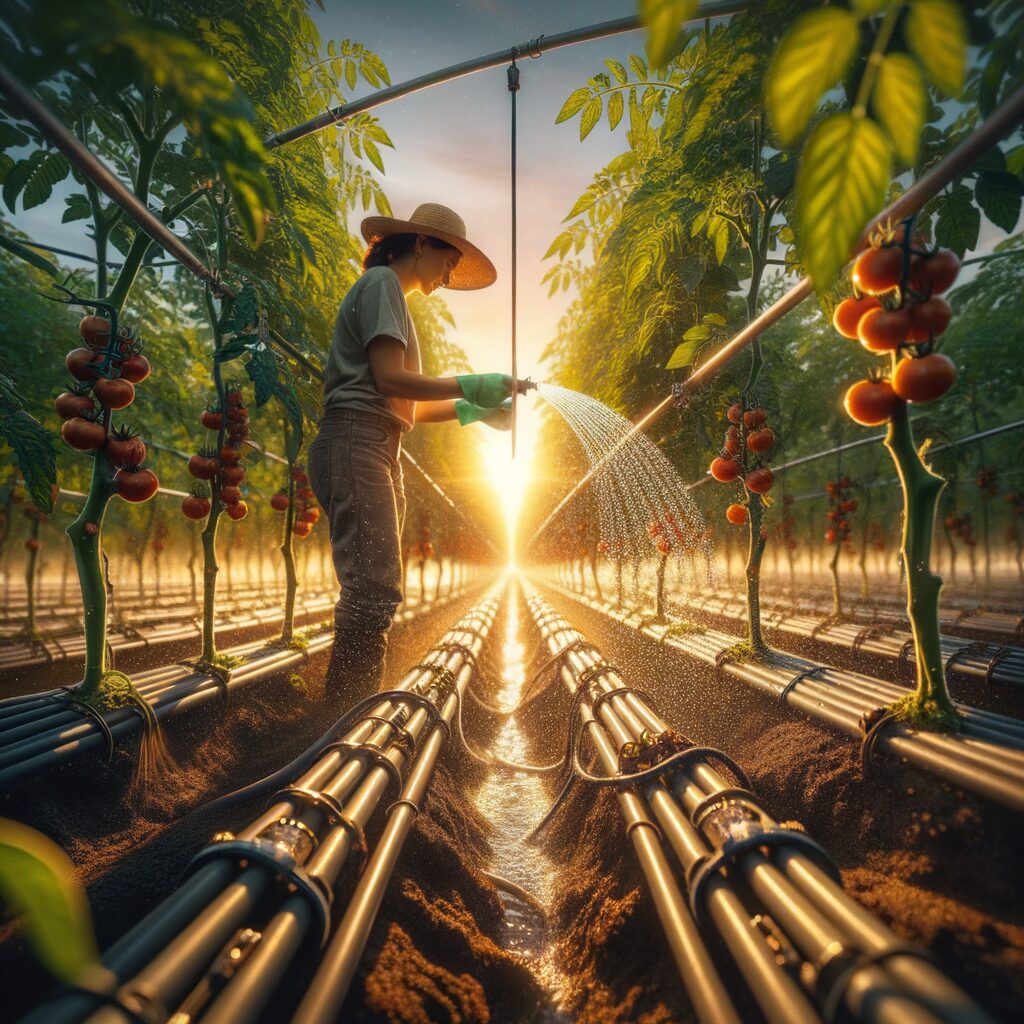
Proper irrigation is essential for the optimal development of tomato crops. A balanced water supply not only favors plant growth but also influences its ability to assimilate nutrients and biostimulants. During different growth stages, water needs vary, and it is crucial to adapt to these demands to avoid problems such as water stress or overhydration.
Impact of Water Stress
Water stress can negatively affect the development of tomatoes, leading to a decrease in yield and fruit quality. Studies have shown that proper irrigation management can mitigate these effects and allow biostimulants to act more effectively. For example, a study conducted by the University of California found that tomatoes exposed to water stress conditions during fruiting showed a 30% lower yield compared to those that received adequate irrigation. Additionally, the content of soluble solids and acidity were compromised, affecting fruit quality.
Plant Physiology and Water Stress
During water stress, tomato plants undergo a series of physiological changes that affect their growth and development. Lack of water causes the stomata, which are the structures responsible for transpiration and CO2 absorption, to close. This closure reduces photosynthetic growth, which in turn decreases the production of sugars and other metabolites essential for fruit development. A study from the University of Córdoba indicates that water stress can lead to a 40% reduction in photosynthesis, resulting in lower overall yield.
Relationship Between Irrigation and Fruit Quality
The quality of tomato fruit is closely linked to irrigation management. An adequate water supply not only ensures optimal growth but also affects organoleptic characteristics such as flavor, texture, and color. Research has shown that controlled deficit irrigation can increase the content of soluble solids, improving the flavor of the fruit. For example, a study at the University of Florida showed that tomatoes grown with controlled deficit irrigation had 20% more soluble solids, resulting in a more attractive product for consumers.
Efficient Irrigation Strategies
Implementing efficient irrigation strategies is key to optimizing tomato cultivation. Some of the most effective include:
- Drip irrigation: This method allows for precise application of water directly to the root zone, minimizing evaporation and runoff. Additionally, it facilitates the uniform application of biostimulants. Studies have shown that drip irrigation can increase yield by 20-30% compared to furrow irrigation. Furthermore, this method has been observed to reduce the incidence of fungal diseases, which thrive in high humidity conditions.
- Irrigation scheduling: Using soil moisture sensors can help determine the optimal time to irrigate. This prevents over-irrigation and ensures that plants receive the right amount of water. Research indicates that implementing sensors can reduce water use by 40% without compromising crop yield. These sensors allow for more precise irrigation, resulting in more efficient use of water resources.
- Irrigation during cool hours: Irrigating during the early morning or late afternoon reduces water loss due to evaporation, ensuring that more water reaches the roots. A greenhouse study showed that irrigating at dawn can increase water use efficiency by 15%. Additionally, this practice can also reduce thermal stress on plants, improving their growth.
- Use of mulching: Applying a layer of organic or plastic material over the soil can reduce evaporation and maintain moisture, improving irrigation effectiveness. A field experiment demonstrated that using mulching can reduce the need for irrigation by 25% and increase yield by 12%. Additionally, mulching helps control weeds and improves soil health by increasing its organic matter content.
- Sprinkler irrigation: Although less efficient than drip irrigation, sprinkler irrigation can be useful in tomato crops under certain conditions. This method allows for broader coverage and can be beneficial in early growth stages. However, it is crucial to adjust the frequency and duration of irrigation to avoid excess moisture that can promote diseases. A greenhouse study found that when used correctly, sprinkler irrigation increased production by 15% compared to traditional methods.
Integration of Biostimulants in Irrigation
The proper application of biostimulants can be enhanced by appropriate irrigation strategies. By integrating biostimulants into the irrigation system, nutrient absorption and resistance to water stress can be improved. Some points to consider are:
- Timing of application: It is advisable to apply biostimulants at specific times, such as before or after irrigation, to maximize their effectiveness. Research suggests that applying biostimulants just before irrigation can improve nutrient absorption by 15-20%. Proper timing can also help minimize nutrient loss in the soil.
- Proper dilution: Ensure that biostimulants are properly diluted in the irrigation water to guarantee uniform distribution. The optimal concentration of some biostimulants can vary between 0.5% and 2%, depending on the specific product. A study in the Journal of Agricultural and Food Chemistry showed that proper dilution of biostimulants can increase their effectiveness by 30%.
- Compatibility: Check that the biostimulants are compatible with other products you are using in irrigation to avoid unwanted reactions. A chemical compatibility study found that certain combinations can result in precipitation or inactivation of biostimulants. Lack of compatibility can reduce the effectiveness of treatments, leading to economic losses.
- Foliar application: In addition to irrigation, foliar application of biostimulants can be an effective technique, especially in situations of water stress. This technique allows for rapid absorption and can be used in combination with irrigation. A study in the Journal of Plant Nutrition demonstrated that foliar application of amino acid-based biostimulants increased resistance to water stress by 25%.
- Beneficial microorganisms: Including microorganisms in irrigation can improve soil health and nutrient availability. Products containing mycorrhizae and beneficial bacteria have been shown to increase water use efficiency and improve nutrient absorption. Research has shown that applying these microorganisms can result in a 30% increase in tomato production.
Related Articles
Need Professional Help?
At Ecoganic in Spain, Europe, we offer Biostimulants, Organic Fertilizers, Bioprotectors. Call us: +34 652 530 492.
Practical Considerations for Farmers
Farmers should consider several factors when implementing these irrigation strategies:
- Soil knowledge: Conduct soil analyses to understand its water and nutrient retention capacity, as well as the specific needs of the crops. Studies have shown that knowledge of the soil profile can improve irrigation efficiency by 20%. This information is crucial for adapting irrigation techniques to the specific characteristics of each field.
- Constant monitoring: Continuously monitoring climatic conditions and the water status of the crop is crucial for adjusting irrigation practices. Using monitoring technologies, such as automatic weather stations, can provide accurate data on evaporation and irrigation needs. A study in Field Crops Research highlighted that constant monitoring can increase water use efficiency by 35%.
- Training: Investing in training on the use of biostimulants and irrigation techniques can provide farmers with a significant competitive advantage. Training programs have shown that farmers who receive training can increase their yield by 25% compared to those who do not. Training can also improve decision-making in the field, resulting in more effective resource management.
- Adaptation to climate changes: Farmers must be prepared to adapt to changes in precipitation and temperature patterns that may affect water availability. Implementing water conservation practices and selecting tomato varieties more resistant to water stress can be key to maintaining productivity in a changing climate. A study in Agricultural Systems showed that selecting resistant varieties can reduce yield losses by 40% during drought periods.
- Cost-benefit evaluation: Implementing efficient irrigation technologies and biostimulants may require a significant initial investment. However, it is essential to evaluate the long-term benefits, including water savings and increased yield. An economic analysis conducted in tomato greenhouses in California demonstrated that adopting drip irrigation and biostimulants resulted in a 50% increase in profitability over three years.
Examples of Field Application
The implementation of these strategies has been tested in various tomato-producing regions. In a study conducted in the Murcia region of Spain, drip irrigation combined with algae-based biostimulants was applied. The results showed a 35% increase in harvest yield and an improvement in fruit quality, with a 20% increase in lycopene content, an important antioxidant for health. This case demonstrates how the combination of technology and biostimulants can revolutionize agricultural production.
Another example can be observed in greenhouses in southern Italy, where an automated irrigation system using moisture sensors was implemented. The combination of this system with the application of a microorganism-based biostimulant resulted in a 30% reduction in water use and a 40% increase in tomato production during the season. This approach not only improved profitability but also contributed to the sustainability of water resources in the region.
Relevant Research
Over the years, various studies have supported the importance of integrating biostimulants and efficient irrigation. A study published in the journal Agricultural Water Management demonstrated that using biostimulants in combination with drip irrigation significantly improved water use efficiency, achieving 50% more yield compared to traditional irrigation methods. Another study in Journal of Plant Growth Regulation showed that applying amino acid-based biostimulants during water stress periods increased plant resistance to stress, resulting in 25% more production.
Additionally, recent research published in Frontiers in Plant Science revealed that using seaweed extract-based biostimulants not only increased yield but also improved fruit quality in terms of sugar and acidity content, which is critical for market acceptance. In this study, treated tomatoes showed 15% more sugars, translating into a significant increase in the quality of the final product.
Challenges and Opportunities
Despite the benefits, there are challenges in implementing efficient irrigation strategies and biostimulants. Lack of technical knowledge and the initial investment in irrigation technologies can be barriers for some farmers. However, the opportunities are vast, especially with the increasing demand for sustainable and high-quality products. Continuous research and education are essential to overcome these obstacles and maximize the potential of these practices in tomato cultivation. It is crucial for farmers to stay updated with the latest innovations in irrigation technology and biostimulants to compete in a constantly evolving market.
Furthermore, collaboration between researchers, universities, and farmers can facilitate knowledge transfer and the implementation of more sustainable farming practices. Creating support networks and promoting agricultural extension programs can be effective tools to help farmers adopt these technologies and improve their production.
Future Perspectives
The future of tomato cultivation in the context of sustainable agriculture looks promising, with an increasing focus on research and development of new biostimulants and irrigation technologies. Biotechnology offers opportunities to create more effective products that optimize nutrient absorption and improve stress resistance. For example, the use of nanoparticle-based biostimulants is being researched for its potential to enhance the effectiveness of applied nutrients and their availability in the soil.
Moreover, advances in soil and climatology monitoring technology will allow farmers to make more informed decisions about irrigation and biostimulant application. The use of drones and remote sensors can revolutionize the way crops are managed, providing real-time data on crop conditions and soil status. A study in Precision Agriculture demonstrated that using advanced monitoring technologies can result in a 30% increase in water use efficiency and a 20% reduction in production costs.
Optimizing Irrigation Strategies with Biostimulants
To maximize the effectiveness of irrigation strategies, it is essential to consider the interaction between water, nutrients, and biostimulants. For example, applying biostimulants containing extracts of algae can improve the soil’s water retention capacity. A study conducted in the Journal of Soil Science demonstrated that soils treated with these biostimulants showed a 15% increase in moisture retention compared to untreated soils. This effect can be particularly beneficial in drought conditions, where water availability is critical for tomato growth.
Likewise, the combination of drip irrigation and biostimulants can facilitate the creation of a more favorable microclimate for cultivation. Research has indicated that using biostimulants can increase microbial activity in the soil, which in turn improves nutrient availability for plants. A study in Applied Soil Ecology reported a 25% increase in microbial activity in soils treated with biostimulants, translating into better soil health and more robust plant growth.
Conclusions
The integration of biostimulants and efficient irrigation strategies in tomato cultivation not only optimizes production but also contributes to agricultural sustainability. Proper water management and the application of biostimulants can result in a significant increase in tomato quality and yield, which is crucial in an increasingly competitive market. Farmers who adopt these practices will be better positioned to face the challenges of climate change and the growing demand for food, ensuring a more sustainable future for agriculture.