Compare unicellular algae and yeast extracts as biostimulants. Improve your crops with Ecoganic. Contact us today!
Introduction
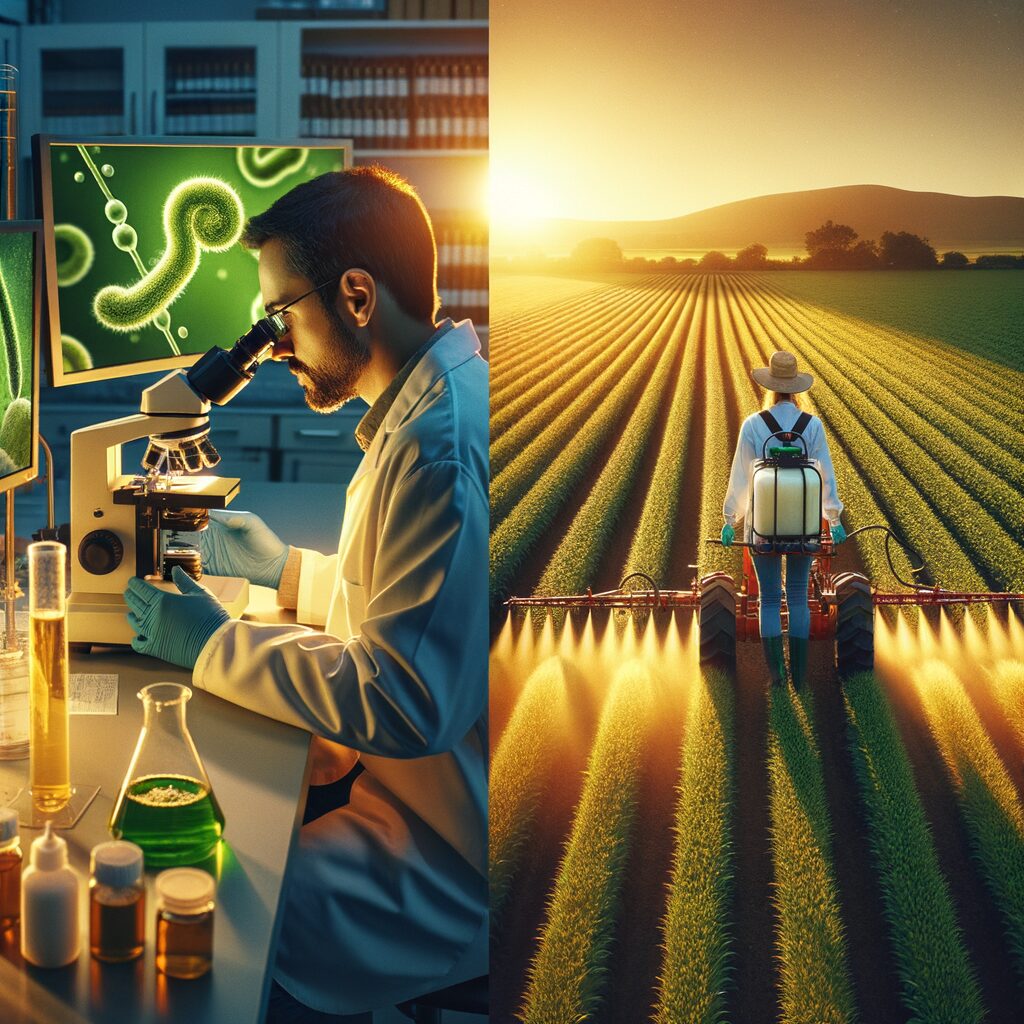
In the field of sustainable agriculture, the use of biostimulants has gained relevance due to their ability to improve the productivity and quality of crops. Among the most prominent biostimulants are unicellular algae and yeast extracts. This article focuses on comparing these two options, analyzing their characteristics, benefits, and practical applications in the field.
Unicellular Algae as Biostimulants
Unicellular algae, such as species of Chlorella and Spirulina, are recognized for their high content of nutrients and bioactive compounds. These algae are used in agriculture due to their properties that promote plant growth and improve resistance to environmental stress.
Benefits of Unicellular Algae
- Growth Stimulation: Unicellular algae provide essential nutrients such as nitrogen, phosphorus, and potassium, favoring root development and vegetative growth. Research has shown that the application of extracts from Chlorella vulgaris can increase plant growth by up to 30% compared to untreated crops.
- Improvement of Stress Tolerance: The bioactive compounds present in these algae help plants resist adverse conditions, such as droughts or high temperatures. A study conducted by the Agricultural Research Institute of Japan found that plants treated with algae extracts showed a 40% increase in antioxidant production, contributing to their resistance to water stress.
- Increase in Crop Quality: The use of unicellular algae has been shown to improve the quality of agricultural products, increasing nutrient content and enhancing appearance. For example, trials conducted with tomato crops observed a 20% increase in vitamin C content in fruits treated with extracts of Spirulina platensis.
Biochemical Mechanisms of Action
Unicellular algae contain a variety of bioactive compounds, such as polysaccharides, amino acids, and phytohormones, which play a crucial role in their function as biostimulants. Polysaccharides, for example, can improve water retention in the soil, which is essential for maintaining plant health during drought periods. Additionally, the amino acids present in algae assist in protein synthesis in plants, which is fundamental for their growth and development. A study published in the Journal of Applied Phycology demonstrated that the use of algae extracts increased the activity of the enzyme ribulose-1,5-bisphosphate carboxylase/oxygenase (RuBisCO), which is crucial for photosynthesis and plant growth.
Practical Applications in the Field
In agricultural practice, unicellular algae can be applied in various ways. For example, in rice crops in Southeast Asia, foliar application of Chlorella extracts has been used to increase yield. Farmers who have implemented this method report a grain production increase of up to 25% compared to traditional methods. Additionally, in vegetable crops, fertigation with algae extracts has been shown to improve plant health and overall growth, resulting in higher quality and healthier products. A practical case in a lettuce greenhouse in Spain showed that plants treated with Spirulina extracts had more uniform growth and significantly greater resistance to pests and diseases, reducing the need for pesticides.
Recent Research on Unicellular Algae
Recent studies have expanded the understanding of how unicellular algae can affect plant physiology. For example, a study conducted on onion crops showed that the application of Spirulina extracts not only improved vegetative growth but also increased photosynthetic activity by 18%, resulting in higher bulb yields. Furthermore, an increase in the concentration of phenolic compounds, which are important for plant defense against pathogens, was observed.
Specific Crops and Results
The application of unicellular algae has proven to be particularly effective in crops such as corn and sugar beets. In trials conducted in greenhouses with corn, a 15% increase in biomass production and a 10% increase in sugar content were reported compared to controls. In the case of beets, it was demonstrated that the application of algae extracts increased tuber diameter by 20%, thus improving the commercial quality of the product.
Yeast Extracts: Benefits and Applications
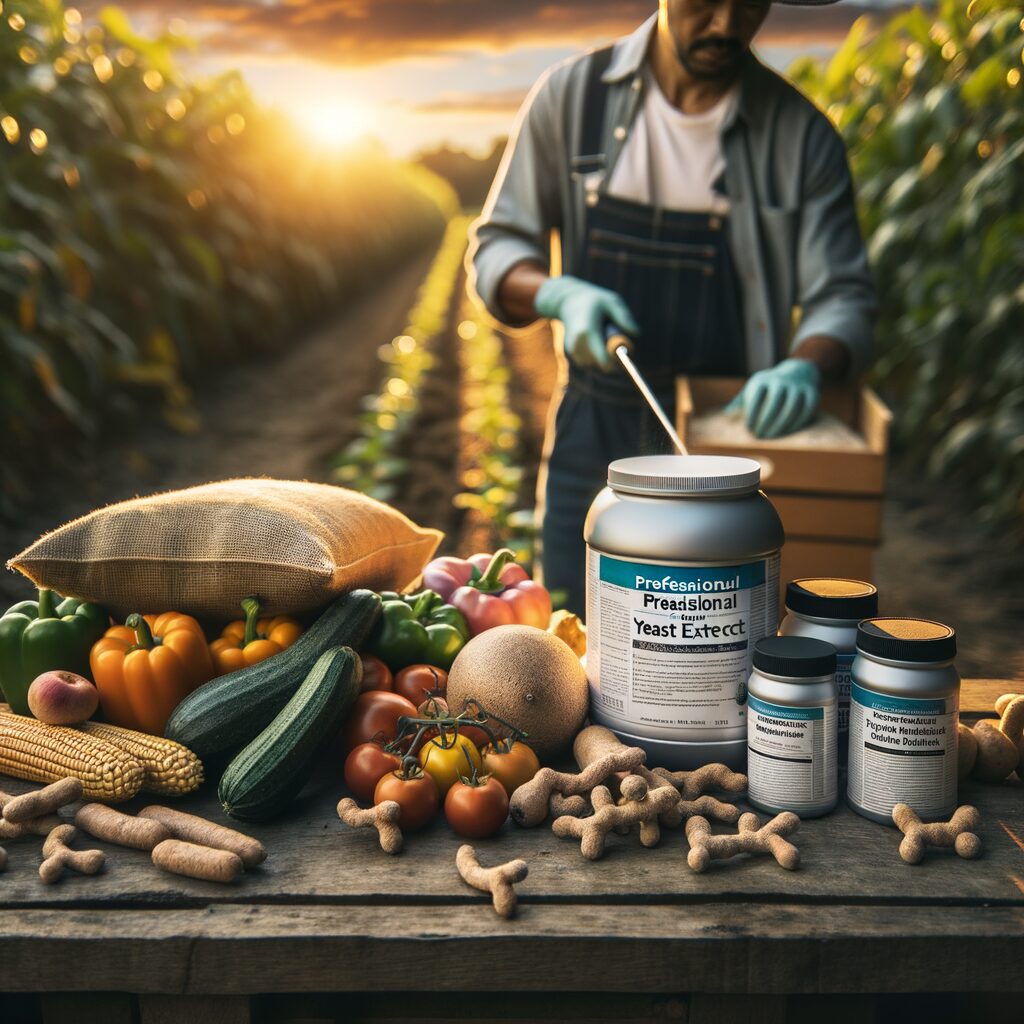
Yeast extracts, obtained mainly from Saccharomyces cerevisiae, are a valuable resource in agriculture. These extracts are rich in amino acids, vitamins, and plant hormones, making them effective biostimulants.
Benefits of Yeast Extracts
- Metabolic Stimulation: Yeast extracts enhance the metabolic activity of plants, resulting in more vigorous growth and greater biomass production. A study conducted on corn crops showed that the application of yeast extracts increased the photosynthesis rate by 15%, leading to a 20% increase in biomass production. This effect is due to the presence of nucleotides that favor ATP synthesis, essential for cellular energy.
- Activation of Stress Response: Like algae, yeast extracts help plants cope with stress situations by promoting the production of defense compounds. In salt stress trials, crops treated with yeast extracts showed a 30% increase in proline production, an amino acid that acts as an osmoprotectant under adverse conditions. This mechanism translates into a greater capacity for plants to maintain homeostasis in unfavorable environments.
- Improvement of Soil Health: These extracts can contribute to the health of the soil microbiome, favoring the activity of beneficial microorganisms. Research has shown that the incorporation of yeast extracts into the soil can increase the population of beneficial bacteria by 50%, thus improving nutrient availability for plants. A study on soybean crops demonstrated that the use of these extracts promoted the growth of Rhizobium, increasing nitrogen fixation.
Mechanisms of Action of Yeast Extracts
Yeast extracts contain a variety of bioactive compounds, including beta-glucans and nucleotides, which are crucial for activating the immune response in plants. Beta-glucans, for example, are recognized for their ability to induce systemic resistance in plants, allowing them to better defend against pathogens. Additionally, nucleotides are essential for nucleic acid synthesis, supporting cell growth and division. A recent study revealed that beta-glucans can also modulate the expression of defense-related genes, increasing disease resistance in tomato crops. Another research highlighted that the application of yeast extracts can stimulate the production of phytohormones such as gibberellic acid, which is associated with stem elongation and root development.
Practical Applications in the Field
The application of yeast extracts has become common in various crops. In viticulture, for example, winemakers use extracts of Saccharomyces cerevisiae to improve grape quality. In field trials, it has been observed that grapes treated with yeast extracts have a 15% higher sugar content, resulting in higher quality wines. In vegetable crops, such as peppers, the application of yeast extracts has been shown to increase production by 25% compared to untreated crops. In a case study on a strawberry plantation, the use of yeast extracts resulted in a 30% increase in fruit production, in addition to improving their flavor and sweetness. Similarly, in potato crops, a 20% increase in tuber yield has been documented when applying yeast extracts during the active growth phase.
Recent Research on Yeast Extracts
Current research has shown that yeast extracts not only enhance plant growth but can also influence soil quality. A recent study conducted with tomato crops found that the application of yeast extracts increased the activity of beneficial microorganisms in the soil, which in turn improved the availability of essential nutrients such as phosphorus and nitrogen. This translates into better growth and development of plants, as well as a 25% increase in fruit yield. Furthermore, it has been evidenced that the application of yeast extracts can reduce the incidence of fungal diseases in vegetable crops, providing a more sustainable approach compared to the application of chemical fungicides.
Specific Crops and Results
In onion crops, yeast extracts have been shown to increase the concentration of antioxidant compounds in bulbs, improving their nutritional value. In trials conducted on cotton crops, it was observed that the application of these extracts increased yield by 30% and improved fiber quality. These results suggest that yeast extracts have broad potential in various agricultural applications. In coffee crops, for example, it has been reported that the use of yeast extracts increases grain production by 25% and improves coffee quality, raising its score in sensory tastings.
Comparison between Algae and Yeast
Both biostimulants offer significant benefits, but their effectiveness may vary depending on the type of crop and environmental conditions.
Comparative Characteristics
| Characteristic | Unicellular Algae | Yeast Extracts |
|---|---|---|
| Nutrients | Rich in macro and micronutrients | Rich in amino acids and vitamins |
| Growth Stimulation | Promotes vegetative growth | Stimulates biomass production |
| Stress Tolerance | Improves resistance to adverse conditions | Activates stress response |
Factors to Consider in the Choice
When choosing between unicellular algae and yeast extracts, it is essential to consider several factors. For example, the type of soil and its composition may influence the effectiveness of each biostimulant. Soils with high salinity may benefit more from yeast extracts, while soils with nutrient deficiencies may respond better to algae. Additionally, the type of crop and its development stage are also determining factors. In young crops, algae may provide an initial boost, while in established crops, yeast extracts may be more beneficial for maximizing yield. A case analysis in different agricultural regions has shown that the combination of both biostimulants can be particularly effective, achieving synergies in growth and crop quality. For example, in vegetable crops, it has been observed that the combination of algae and yeast can result in a 30% increase in total production compared to using each one separately.
Related Articles
Need professional help?
At Ecoganic in Spain, Europe, we offer Biostimulants, Organic Fertilizers, Bioprotectors. Call us: +34 652 530 492.
Practical Value and Usage Decisions
The choice between unicellular algae and yeast extracts will depend on several factors, such as the type of crop, soil conditions, and the specific goals of the farmer. For sustainable and productive agriculture, it is advisable to conduct field trials to determine which of these biostimulants provides better results in each situation.
Application Recommendations
It is recommended to conduct a soil analysis before applying either of these biostimulants. This will allow for adjusting doses and application methods according to the specific needs of each crop. For example, in vegetable crops, a foliar application of unicellular algae is suggested during the seedling stage, while yeast extracts can be applied during the flowering phase to maximize yield. Additionally, it is important to consider the possibility of combinations of both biostimulants, as they can offer synergies that enhance their effects. In trials conducted on corn crops, it was observed that the joint application of both biostimulants resulted in a 40% increase in total production, suggesting that their combined use can be an effective strategy in modern agriculture. Furthermore, it is recommended to carry out applications at optimal times, such as in the early hours of the morning or late in the afternoon, to maximize absorption and minimize evaporation.
Case Studies
In a case study conducted on an avocado plantation in California, yeast extracts and unicellular algae were applied in different plots. The results showed that the plots treated with both biostimulants produced 35% more fruit compared to the control plots. This combined approach not only improved yield but also increased fruit quality, with an observed increase in nutrient content and overall appearance. In another case, in rice crops in Thailand, a 50% increase in grain production was recorded when applying algae and yeast extracts together, highlighting the potential of these practices in sustainable agriculture globally. Additionally, in a strawberry plantation in Mexico, it was observed that the combined use of both biostimulants resulted in larger and sweeter fruits, increasing their market value.
Economic Considerations
The use of biostimulants such as unicellular algae and yeast extracts not only has agronomic benefits but can also positively impact the farmer’s economy. A cost-benefit analysis conducted on vegetable crops showed that the investment in biostimulants can be recovered in less than two crop cycles, thanks to significant increases in yield and product quality. For example, in tomato crops, the use of yeast extracts along with algae resulted in an increase of 1.5 tons per hectare, translating into considerable income increases for farmers. This results in a return on investment (ROI) that can exceed 300% in high-value crops such as avocado and pepper.
Impact on Sustainability
The adoption of biostimulants in agriculture not only promotes plant growth but also contributes to more sustainable agricultural practices. The use of unicellular algae and yeast extracts can reduce dependence on chemical fertilizers and pesticides, thereby decreasing the environmental footprint of agricultural production. A study conducted on citrus crops demonstrated that the implementation of biostimulants reduced the need for chemical fertilization by 30%, which not only saves costs but also improves soil health in the long term. Furthermore, the use of these biostimulants can contribute to climate change mitigation by improving plants’ ability to capture carbon, which is crucial in the fight against global warming.
Comparative Field Studies
To evaluate the effectiveness of unicellular algae and yeast extracts, comparative studies have been conducted under different agricultural conditions. In an experiment conducted on corn crops under water stress conditions, it was observed that plants treated with algae showed 25% more resistance to dehydration compared to those treated with yeast extracts. However, in fertile and well-irrigated soil conditions, yeast extracts proved to be more effective, resulting in a 30% increase in biomass production. These results suggest that the choice of biostimulant should be based not only on the type of crop but also on the specific conditions of the agricultural environment.
Future Perspectives on the Use of Biostimulants
As agriculture faces challenges such as climate change and the growing demand for food, the use of biostimulants like unicellular algae and yeast extracts is expected to expand. Research in this field continues, exploring combinations of biostimulants and their application in high-value crops. Additionally, new formulations are being developed to enhance the effectiveness of these products, which could lead to more widespread use in both conventional and organic agriculture. Recent studies have begun to investigate the use of biostimulants in cover crops and agroforestry systems, showing promising results in improving soil health and biodiversity.
Related Articles
Frequently Asked Questions
What are the main benefits of using unicellular algae as a biostimulant?
Unicellular algae stimulate growth, improve stress tolerance, and increase crop quality due to their nutrient content and bioactive compounds.
Are yeast extracts suitable for all types of crops?
Yes, yeast extracts can be used in a variety of crops, although it is recommended to adjust doses and application methods according to the specific needs of each plant.
How are these biostimulants applied in the field?
Both biostimulants can be applied through fertigation, foliar spraying, or as part of a fertilization program, always following the recommended doses.
Is it possible to combine unicellular algae and yeast extracts?
Yes, in many cases, the combination of both biostimulants can maximize their benefits, improving plant growth and resistance.