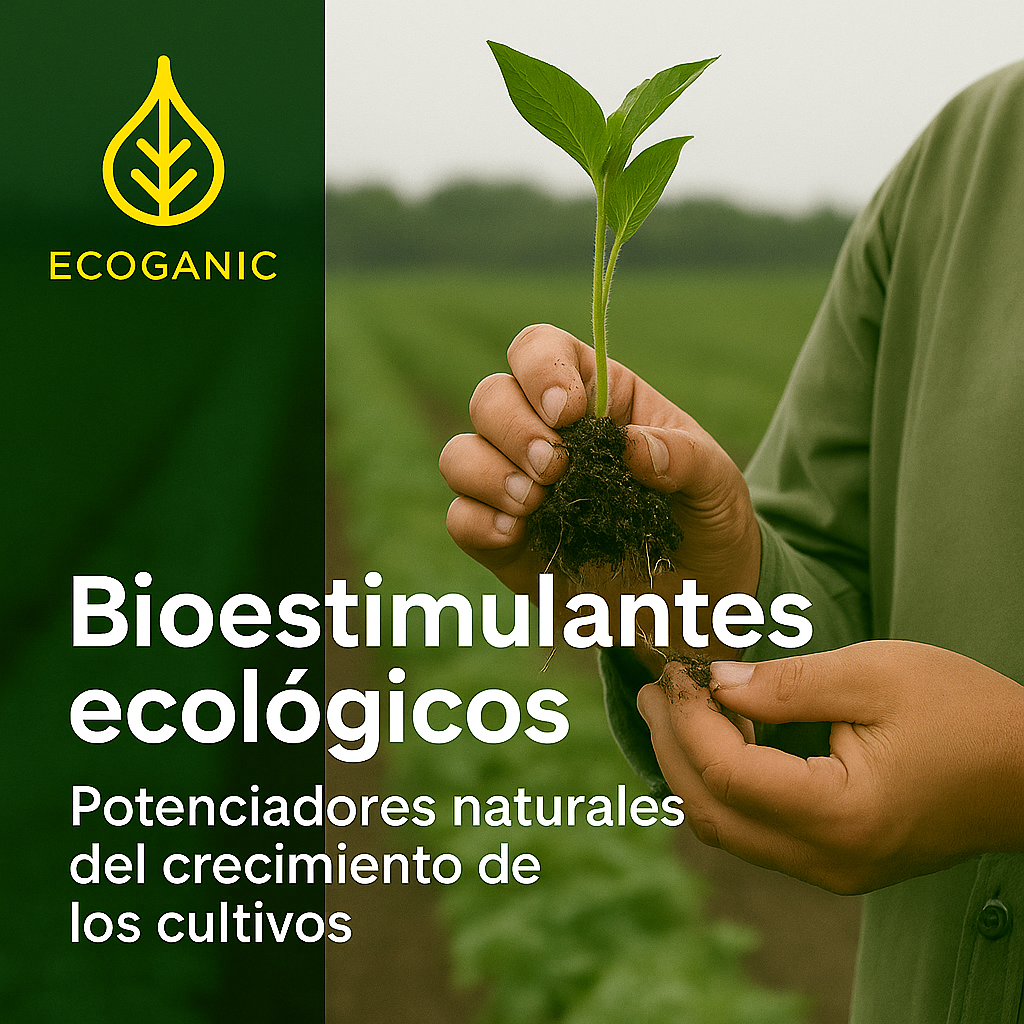
The search for higher agricultural yields with less environmental impact has driven the adoption of ecological biostimulants. These innovative products, made from natural substances or microorganisms, “stimulate the nutritional processes of plants” to improve their vigor and productivity [External Link 1]. Unlike traditional fertilizers, biostimulants act as catalysts: they improve nutrient use efficiency, increase stress resistance (drought, salinity), and enhance crop quality.
The use of biostimulants has skyrocketed globally. The global market reached $3 billion in 2023 and is expected to double by 2030 [External Link 2]. Europe is a pioneer, but Asia and Latin America, with the latter being the fastest-growing region, are projected to surpass it. This boom responds to the need for a more efficient and sustainable agriculture.
What is an Agricultural Biostimulant and How Does It Work?
According to Regulation (EU) 2019/1009, an agricultural biostimulant stimulates the nutritional processes of plants with the aim of improving nutrient use efficiency, tolerance to abiotic stress, crop quality, or nutrient availability. It is neither a fertilizer nor a pesticide, but a plant metabolism enhancer.
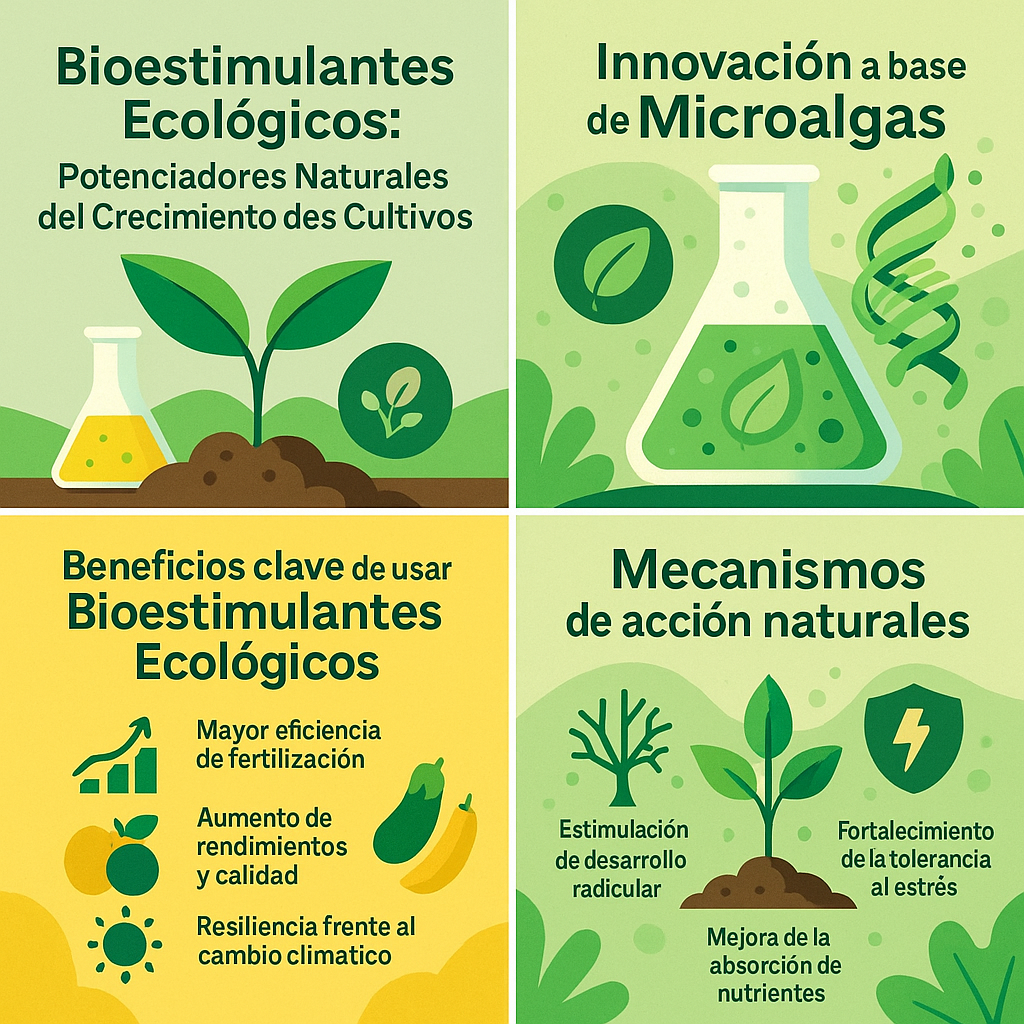
Mechanisms of Action of Biostimulants:
- Stimulation of enzymes and metabolic pathways: They activate genes associated with growth or defense. Extracts from algae, for example, induce enzymes for nutrient assimilation.
- Improvement of nutrient absorption: Components such as organic acids or amino acids chelate nutrients, making them more available and improving nutritional efficiency.
- Strengthening of abiotic stress tolerance: They activate natural resistance mechanisms against drought, salinity, or extreme temperatures.
- Stimulation of root development: They promote a more extensive root system for better water and nutrient uptake.
- Improvement of harvest quality: They affect size, sugars, coloration, and post-harvest life of the fruits.
In summary, the biostimulant empowers the plant to better utilize resources and express its genetic potential.
Main Types of Ecological Biostimulants
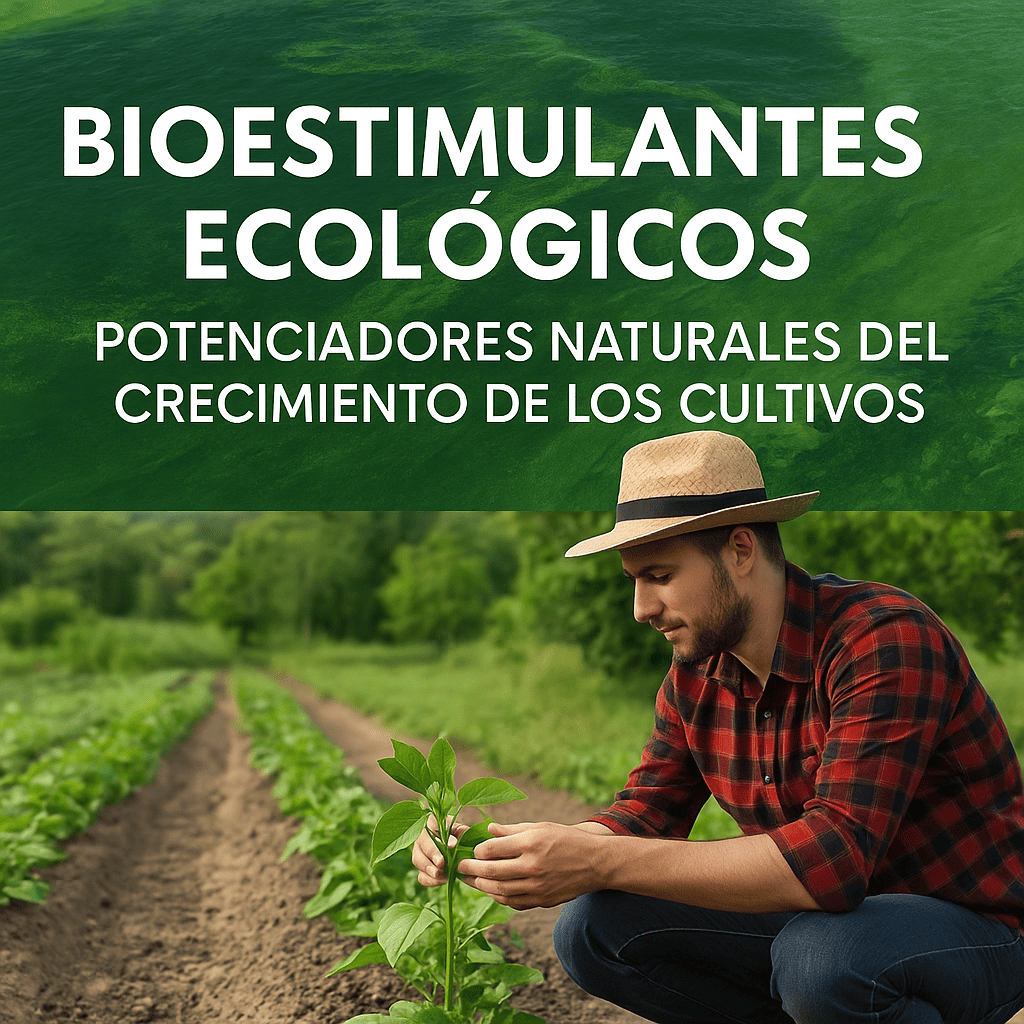
The range is broad. The most used in organic and conventional agriculture are:
Humic and Fulvic Acids
Extracted from organic matter (humus, leonardite). They improve soil structure, nutrient retention, and stimulate root development. Essential for revitalizing soils and improving yields naturally.
Seaweed Extracts
Mainly from brown algae (Ascophyllum nodosum). They contain phytohormones, bioactive polysaccharides [External Link 3], micronutrients, and osmoprotectants. Highly valued in horticultural and fruit crops to improve size and stress resistance.
Amino Acids and Peptides
Obtained by hydrolysis of proteins. They serve as building blocks, act as chelators of micronutrients, and help in post-stress recovery. They enhance critical phases such as flowering and fruit set.
Chitosan and Other Biopolymers
Chitosan, derived from chitin, acts as an elicitor, activating the plant’s natural defenses against diseases. It can also improve water retention in the soil.
Plant Extracts and Natural Metabolites
Compounds from terrestrial plants (aloe vera, yeasts, etc.) that provide hormones, vitamins, and antioxidants.
Beneficial Microorganisms (Microbial Biostimulants)
Mycorrhizal fungi (improve phosphorus absorption) and PGPR bacteria (Pseudomonas, Bacillus) that release hormones or solubilize nutrients. They improve soil and plant health.
Beneficial Mineral Elements
Such as silicon (structural resistance and to fungi) or selenium, which in small doses act as biostimulants improving stress tolerance or quality.
Benefits of Using Ecological Biostimulants
- Greater fertilization efficiency: They optimize nutrient absorption, allowing for a reduction in chemical fertilizers.
- Increased yields and quality: They improve production, size, °Brix, color, and shelf life.
- Resilience to climate change: They help plants withstand water, thermal, and saline stress.
- Compatibility with organic farming: Most are allowed in organic certification.
- Reduction of transplant stress: They promote rapid establishment and initial vigor.
- More alive and fertile soils: Microbial types improve soil biota and structure in the long term.
- Replacement of conventional chemicals: They contribute to agriculture with a lower ecological footprint and more sustainable [External Link 4].
Usage Strategies and Integration in Agricultural Management
- Application at key moments: Pre-flowering, fruit filling, before anticipated stress.
- Combination with fertilization: They complement (do not completely replace) traditional fertilization or enhance organic fertilizers.
- Compatibility in mixtures: Check compatibility before mixing with other products in the tank.
- Method of application: Via seed, foliar, or fertigation, depending on product and crop.
- Monitoring and adjustments: Observe results and adjust doses or timings to maximize response.
Perspectives in Europe and Latin America
Europe, with its new regulation (Regulation EU 2019/1009), has boosted the sector, facilitating marketing and trust. The community agricultural policy favors its adoption.
Latin America shows the fastest growth worldwide. Demand is increasing in Mexico, Chile, Peru, Colombia, Argentina, and Brazil, driven by exports and the search for sustainability.
Ecoganic Case: Innovation in Microalgae-Based Biostimulants
At Ecoganic, we develop unique ecological biostimulants based on freshwater unicellular algae. Our biotechnological formulas optimize crop nutrition and strength in a 100% sustainable way, as reported by media such as Infobae [External Link 5].
Our products, rich in amino acids, polysaccharides, and bioactive micronutrients:
- Improve nutrient absorption and photosynthetic efficiency.
- Increase resistance to abiotic stress.
- Contribute to regenerating degraded soils.
A standout product is Ecoganic Boost Universal, formulated for various crops, which boosts growth and vigor in a balanced way.
Conclusion
Ecological biostimulants are key tools for modern and sustainable agriculture. They allow farmers to enhance their crops naturally, improving nutrition, resilience, and quality, with less dependence on chemical inputs. They are indispensable allies for climate-smart agriculture.
At Ecoganic.eu, we are committed to this vision, offering innovative solutions such as our microalgae-based biostimulants. We believe that stimulating plants naturally is investing in a more prosperous agricultural future in harmony with the environment.