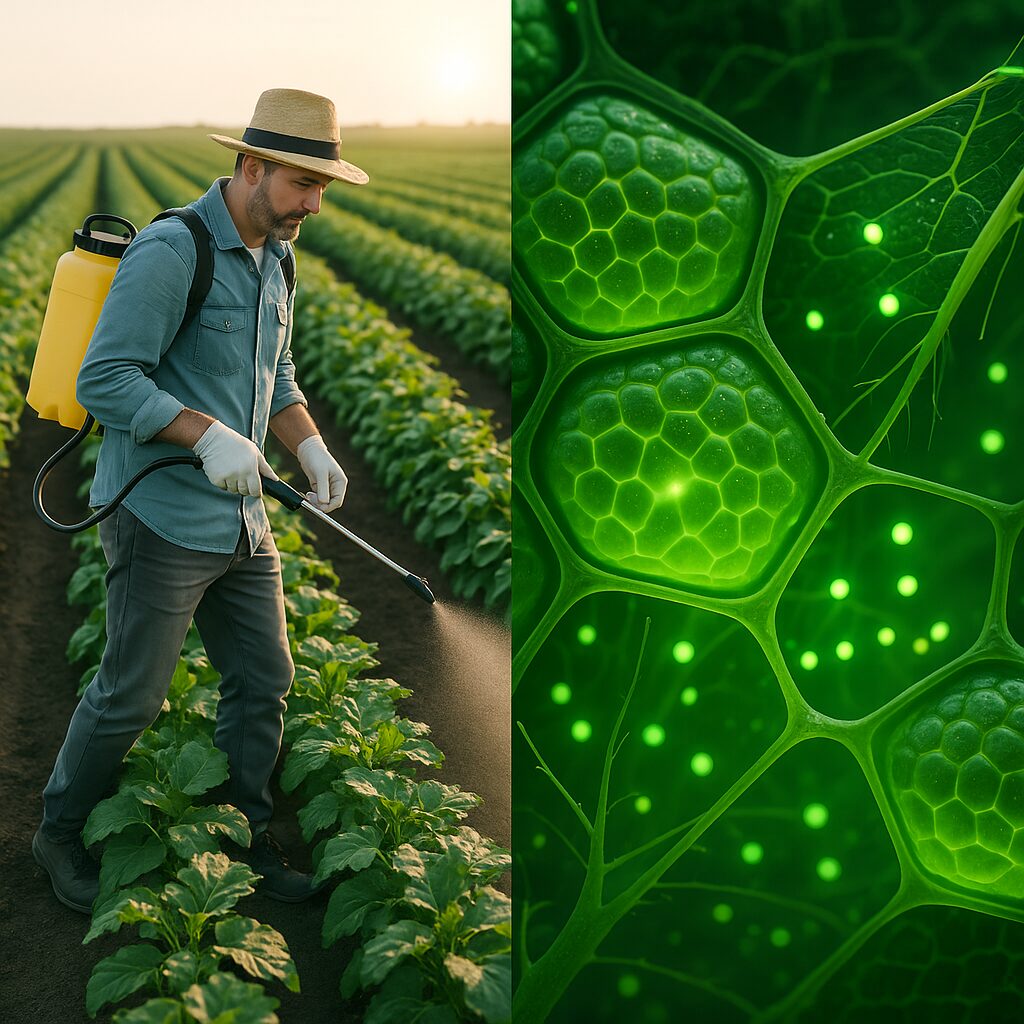
Agricultural biostimulants: what they are and how they work. Learn about their benefits and applications in sustainable agriculture. Get informed now!
What are agricultural biostimulants?
Agricultural biostimulants are natural products that improve the health and performance of crops. They work by increasing nutrient availability, enhancing water absorption, and promoting plant growth. These products, which can be derived from algae, microorganisms, or organic compounds, are not conventional fertilizers but complement sustainable agricultural practices, helping farmers optimize resources and improve productivity in an ecological manner.
Mechanisms of action of biostimulants
Biostimulants work through various biochemical and physiological mechanisms that favor plant growth. Among these mechanisms are:
- Stimulation of microbial activity: Biostimulants can increase the population and activity of beneficial microorganisms in the soil. A study conducted by the French Agricultural Research Institute showed that the application of algae extracts can increase microbial diversity by 30%, thereby improving soil fertility. This increase in microbial diversity is also associated with a greater capacity for organic matter decomposition, resulting in a more efficient release of nutrients for plants.
- Improvement of nutrient absorption: The amino acids and peptides present in some biostimulants favor nutrient absorption. Research has shown that the application of amino acids can increase nitrogen absorption by 15% in corn crops. Additionally, amino acids can act as pH modulators of the soil, further improving nutrient availability under adverse conditions.
- Regulation of environmental stress: Biostimulants help plants tolerate adverse conditions, such as drought or salinity. A study from the University of Córdoba in Spain reported that crops treated with biostimulants showed 20% more drought resistance compared to controls. This is because biostimulants can promote the production of osmoprotective compounds, which help plants retain water and increase their turgor.
- Increase in the synthesis of phytohormones: Biostimulants can stimulate the production of phytohormones such as auxins, gibberellins, and cytokinins, which are crucial for plant growth and development. A study from the Spanish National Institute of Agricultural Research demonstrated that algae extracts increase auxin levels by 25%, promoting greater cell division and root elongation. This effect is particularly beneficial during critical growth stages, such as germination and seedling establishment.
- Improvement of soil structure: The application of biostimulants, especially those containing humic acids, can improve soil structure, increasing its porosity and water retention capacity. A study in rice fields in Italy showed that the application of humic acids increased water retention capacity by 30%, which is vital in drought-prone areas. This improvement in soil structure also facilitates aeration and root development, resulting in more robust plant growth.
- Stimulation of disease resistance: Biostimulants can also induce resistance in plants against pathogens. For example, it has been observed that the application of certain algae extracts can trigger the production of phytoalexins, compounds that act as natural defenses against diseases. A study conducted on pepper crops showed that treatments with algae-based biostimulants reduced the incidence of fungal diseases by 40%.
Sources of biostimulants
Biostimulants can be derived from various sources, each with its own characteristics and specific applications:
- Algae extracts: These biostimulants are rich in phytohormones, polysaccharides, and micronutrients. Marine algae, such as Sargassum and Ascophyllum nodosum, are commonly used. Studies have shown that algae extracts can increase yields in tomato crops by 25%. Additionally, they contain bioactive compounds that help plants resist diseases and environmental stress. For example, it has been observed that crops treated with algae extracts have a lower incidence of fungal diseases, resulting in reduced use of fungicides.
- Amino acids: These organic compounds are essential for protein synthesis and can be used by plants to improve their growth and resistance. It has been shown that the application of amino acids in vegetable crops can result in a 15% increase in yield. Additionally, amino acids can act as chelators, facilitating the absorption of essential nutrients such as iron and zinc. This is especially useful in soils with high acidity, where the availability of these micronutrients may be compromised.
- Microorganisms: These include beneficial bacteria and fungi that can colonize plant roots and improve nutrient availability. For example, the application of Rhizobium in legume crops can increase nitrogen fixation by 40%. Additionally, mycorrhizal fungi can increase phosphorus absorption by 50%, an essential nutrient for root development and flowering. These microorganisms are also capable of producing metabolites that promote plant growth and disease resistance.
- Humic acids: These organic compounds improve soil structure and increase water retention. Research has shown that the application of humic acids can increase the soil’s water retention capacity by 30%. Additionally, humic acids can stimulate soil microbial activity, contributing to a more efficient nutrient cycle. Incorporating humic acids into soil management can transform its dynamics, favoring an environment conducive to plant growth.
Types of biostimulants and prices
| Type of Biostimulant | Price per kg (€) | Application Area |
|---|---|---|
| Algae Extracts | 15-25 | All types of crops |
| Amino Acids | 20-30 | Fruit trees and vegetables |
| Microorganisms | 10-20 | Cereal crops |
| Humic Acids | 12-22 | Agricultural soil |
Price and effectiveness comparison
The prices of biostimulants can vary significantly depending on their type, quality, and manufacturer. For example, algae extracts, although more expensive, often have proven effectiveness in improving plant growth and resistance. A comparative study conducted by the University of Agricultural Sciences in Italy found that crops treated with algae extracts had a 30% increase in production compared to those treated only with conventional fertilizers. This increase translated into greater profitability for farmers, justifying the initial investment in biostimulants.
On the other hand, microorganisms can be a more economical and effective option for improving soil health in the long term. It has been shown that inoculating soils with specific microorganisms can result in yield increases of up to 25% in corn crops, justifying the initial investment in these biostimulants. Additionally, microorganisms can help reduce the need for chemical fertilizers, resulting in additional savings for the farmer. A cost-benefit analysis conducted on soybean farms in Brazil showed that the application of microorganism-based biostimulants not only improved yield but also reduced input costs by 15%, representing a positive impact on crop profitability.
Our experience with biostimulants
At Ecoganic, we have worked on multiple projects since 2018, applying biostimulants in various areas of Europe. Our focus has ranged from vegetable crops on the Mediterranean coast to fruit trees in northern Europe. Our results show an improvement in soil quality and an increase in crop resistance to pests and diseases, always in accordance with sustainable agricultural practices.
Success stories in biostimulant applications
A notable case was the application of biostimulants in a greenhouse tomato crop in the Murcia region of Spain. An algae extract-based biostimulant was used, resulting in a 40% increase in yield and a notable improvement in fruit quality, with a 15% increase in soluble solids content, translating to better taste and commercial quality. This increase in soluble solids content was also associated with greater disease resistance, allowing for a reduction in fungicide use in the crop. The implementation of this sustainable approach not only benefited production but also helped position the farmer as a leader in responsible agricultural practices.
Another example can be seen in a strawberry crop in northern Italy, where specific microorganisms were applied in combination with amino acids. The results showed a 30% increase in production, as well as a significant reduction in the incidence of fungal diseases, thanks to the improvement of the plants’ immune system. In this case, it was observed that the use of microorganisms also improved soil quality, increasing organic matter by 20% after three crop cycles. This increase in organic matter not only benefited the strawberries but also created a healthier environment for future crops, promoting long-term sustainability.
Additionally, in an experiment conducted on a corn crop in Germany, the use of humic acids in combination with algae extracts resulted in a 35% increase in total yield, as well as an improvement in soil structure that favored root growth. Farmers reported better water retention capacity in the treated soils, resulting in less dependence on irrigation under drought conditions. This case is a clear example of how biostimulants can play a crucial role in adapting to changing climatic conditions and in efficient water management.
Research and development in biostimulants
At Ecoganic, we are committed to the research and development of new biostimulants that meet the specific needs of our farmers. We collaborate with universities and research centers to conduct field trials and laboratory studies that validate the effectiveness of our products. For example, a recent study in collaboration with the University of Barcelona evaluated the effectiveness of a new microorganism-based biostimulant in vegetable crops, demonstrating not only an increase in yield but also an improvement in soil quality. The results indicated that the use of this biostimulant could be a viable solution for improving production in areas with degraded soils.
Additionally, we are exploring new formulations that combine different types of biostimulants to maximize their effect. An innovative approach we have implemented is the combination of humic acids with algae extracts, which has been shown to increase water and nutrient retention, thereby improving irrigation efficiency and reducing the need for additional fertilizers. In trials conducted, this combination has shown an increase in vegetable crop production of up to 40%, in addition to improving soil structure and microbial biodiversity. This integrated approach allows farmers to achieve higher yields without compromising ecosystem health.
Another important aspect of our research is the evaluation of the effects of biostimulants on mitigating abiotic stress. Preliminary studies indicate that the use of biostimulants can reduce yield loss under water and salinity stress conditions, which is essential for adapting to climate change. For example, in field trials on barley crops, treatments with biostimulants have shown a 30% reduction in yield loss under salinity conditions. This is not only beneficial for crops but also helps farmers maintain the economic viability of their farms in the face of increasing climate change pressures.
Long-term benefits of biostimulants
The benefits of biostimulants are not limited to an immediate increase in production. In the long term, their use can lead to improved soil structure, increased microbial biodiversity, and reduced dependence on chemical inputs. Longitudinal studies have shown that the continued use of biostimulants can result in a sustainable yield increase of up to 50% in cereal crops over several years. This is because biostimulants promote healthier soil, which in turn supports more robust plant growth. Additionally, the improvement in microbial biodiversity contributes to a more efficient nutrient cycle, benefiting all crops in a diversified agricultural system.
Moreover, the application of biostimulants can help mitigate the impact of climate change on agriculture. By improving plants’ ability to tolerate water stress and temperature variations, biostimulants enable farmers to adapt to changing climatic conditions, ensuring sustainable food production. For example, in a study conducted on grape crops in drought-affected regions, it was demonstrated that treatments with biostimulants increased drought tolerance by 25%, resulting in more consistent yields across different climatic seasons. This type of adaptability is crucial for ensuring food security in an increasingly uncertain world.
Finally, the use of biostimulants contributes to agricultural sustainability by reducing the need for chemical inputs, thus decreasing soil and water pollution. A life cycle analysis conducted on vegetable farms in Spain showed that the use of biostimulants can reduce the carbon footprint of the crop by 20%, which is an important step towards regenerative agriculture. This approach not only benefits the environment but can also improve consumer perception of agricultural products, creating opportunities for farmers who adopt sustainable practices.
In conclusion, biostimulants not only represent an effective alternative to improve crop productivity but are also a key tool for advancing towards more sustainable and resilient agriculture. Their use can significantly contribute to soil health, reduce chemical inputs, and adapt to climate change, making them a valuable option for farmers looking to optimize their production responsibly.
Related Articles
Need professional help?
At Ecoganic, we offer Biostimulants and sustainable agriculture.
What are agricultural biostimulants and how do they work
Agricultural biostimulants are substances or microorganisms that, when applied to plants or soil, improve plant growth and development, increasing their resistance to stress factors and optimizing nutrient use. According to the International Biostimulants Association, the use of biostimulants can increase nutrient use efficiency by 20-30%, which translates into lower use of chemical fertilizers and cost reductions for farmers.
These products act at the physiological level, promoting processes such as water absorption, nutrient metabolism, and soil microbial activity. Additionally, it has been shown that biostimulants can increase biomass production by 15-25%, resulting in more abundant and healthy harvests. For example, the use of marine algae extracts has shown significant improvements in plant resistance to adverse conditions, such as droughts or saline soils.
To maximize the benefits of biostimulants, it is recommended to apply them at strategic moments, such as during transplanting or during periods of stress. It is also crucial to select the appropriate type of biostimulant according to the specific needs of the crop and soil conditions. Conducting a soil analysis beforehand can help determine which nutrients are deficient and how biostimulants can complement agronomic management.
Frequently Asked Questions
How long do biostimulants take to take effect?
Most biostimulants show results within 2 to 4 weeks after application.
Are they safe for the environment?
Yes, biostimulants are designed to be environmentally friendly and do not generate toxic waste.
What brands are recommended?
Some recognized brands include Biobizz and Algaflor, known for their effectiveness and sustainability.
Can they be used alongside conventional fertilizers?
Yes, biostimulants can complement fertilizers, improving their effectiveness.
Which crops benefit the most?
Vegetable, fruit, and cereal crops tend to respond better to the application of biostimulants.
Where can I purchase biostimulants?
They can be purchased at specialized agricultural stores or through online suppliers like Ecoganic.
Are there studies supporting their effectiveness?
Yes, various studies support the effectiveness of biostimulants, including reports from the FAO and publications in ScienceDirect.
What is the average cost of biostimulants?
The cost can vary between 10 and 30 euros per kilogram, depending on the type and brand.